
Manual Treatments
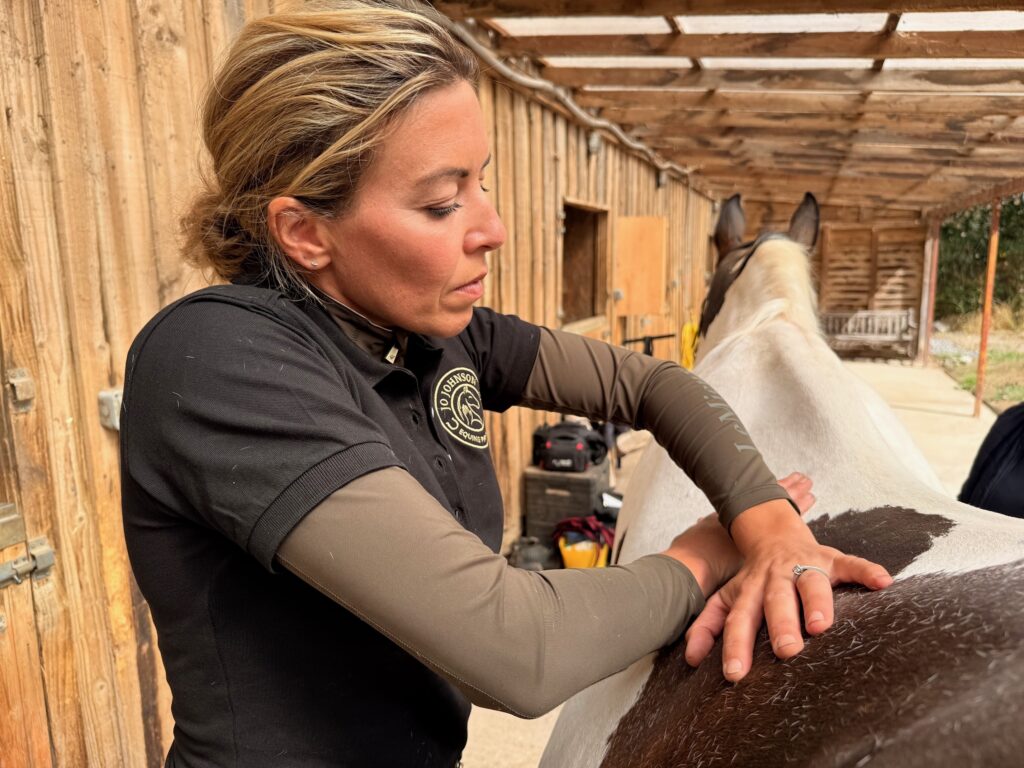
Hands-on therapy is at the heart of equine physiotherapy. Using a range of skilled manual techniques, I work to relieve discomfort, restore movement, and improve your horse’s physical function and well-being.
Each treatment is tailored to your horse’s individual needs and guided by the findings of their assessment.
Treatments Provided
This includes a variety of massage techniques designed to:
- Reduce muscle tension and spasms
- Improve circulation and lymphatic drainage
- Release adhesions and scar tissue
- Promote relaxation and comfort
The fascia is a network of connective tissue that surrounds muscles and joints. Restrictions in the fascia can limit mobility and cause pain. Myofascial release uses slow, sustained pressure to gently stretch and release fascial tension—improving overall movement quality and posture.
Targeted pressure is applied to areas of localised muscle tightness—often called “knots” or trigger points. This technique helps:
- Alleviate referred pain
- Restore normal muscle function
- Break chronic tension cycles
- Improve coordination and performance
Gentle passive movements of joints are used to:
- Improve joint range of motion
- Reduce stiffness and discomfort
- Encourage synovial fluid circulation (supporting joint health)
This can be especially useful in older horses or those recovering from injury.
Controlled stretching helps lengthen muscles, increase flexibility, and support correct muscle patterns. Techniques may include:
- Passive range-of-movement stretches
- Reflex or facilitated stretches
- Dynamic mobilisations (e.g., carrot stretches)
These are often incorporated into your horse’s ongoing home programme.
Reflex inhibition techniques use specific pressure to interrupt overactive muscle patterns. This helps:
- Reduce involuntary muscle guarding or spasm
- Restore natural neuromuscular control
- Encourage more efficient, balanced movement
- Calm the nervous system and promote relaxation
Often used alongside other manual therapies, reflex inhibition can be especially helpful in horses showing compensatory movement patterns or postural tension.
A Holistic, Hands-On Approach
Manual therapy is more than just massage—it’s a carefully applied set of techniques based on anatomy, biomechanics, and clinical reasoning. It not only supports recovery from injury, but plays a vital role in maintaining comfort and preventing problems before they develop.
Every session is calm, respectful, and adapted to your horse’s tolerance and temperament. The goal? To help your horse feel better, move better, and perform to their fullest potential.